New Boston Historical Society
New Boston, New Hampshire
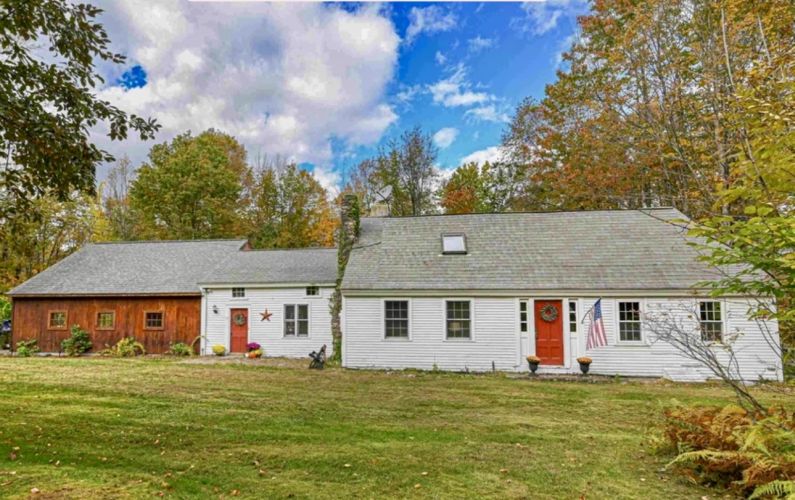
Behind the Door: 17 Lewis Road
by Mary Atai (June 2026)
Joseph A. Leach owned a total of 90 acres here by the mid-1800s, valued at $1150. Joseph was a farmer who raised seven children with his wife, Harriet Dickey Leach. The property passed to the hands of their youngest son, Herbert Leach, also a farmer, in 1893.
By 1918, Frank Daniels had bought the property and farmed it. After he died, his widow, Angeline, sold the land to George and May Lewis in April, 1932.
George Lewis was working as a minister in Hingham, Massachusetts, while also running a small grocery store to make ends meet. In 1932, George and May and their three sons, Robert, Ralph, and Richard, decided to move to New Hampshire, where they hoped to buy a farm and ride out the Depression. They ended up buying this farm on Lewis Road, which was the first land shown to them.
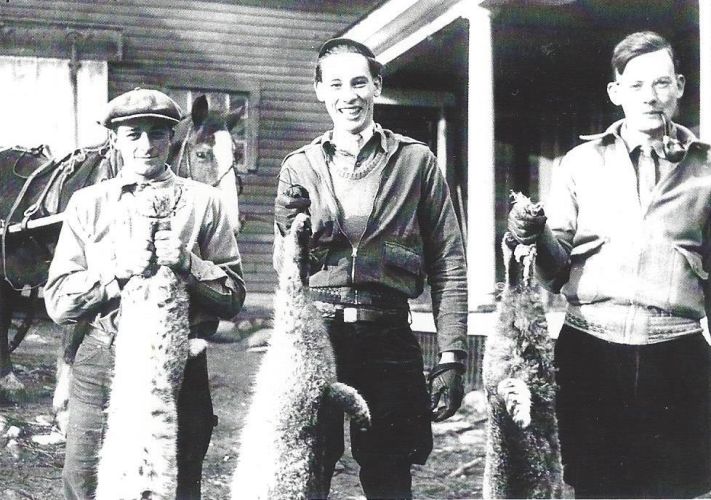
The Lewis boys display the bobcats they caught in 1933.
The house consisted of "six good rooms downstairs and an unfinished attic that could be made in to three good sized rooms." There was an outhouse and limited running water, and the house was heated by coal stoves.
Unfortunately, the Lewis family were not really farmers — they were well-educated city people who made many missteps over the years. One of the worst experiences occurred in 1941 when they tried controlled burning to clear the fields of underbrush. This caused a significant fire which badly damaged sheds, including one in which there was an industrial-sized generator. George Lewis suffered burns to his hands and head while he attempted to drive the family car away from the spreading fire. The metal doors had melted and were stuck closed because the car's roof was on fire. George was saved by a friend who was able to pull him from the car.
As the Depression years slogged on, and even afterward, there were many foreclosures in the area. Rev. Lewis loved to attend all the auctions and buy boxes of unsold leftovers at the end for very little money. He loaded everything in his car, took it to the farm and stored it in his two barns and the various sheds, never finding a use for most of it. The townspeople found him to be eccentric but everyone knew he was well educated and spoke several languages.
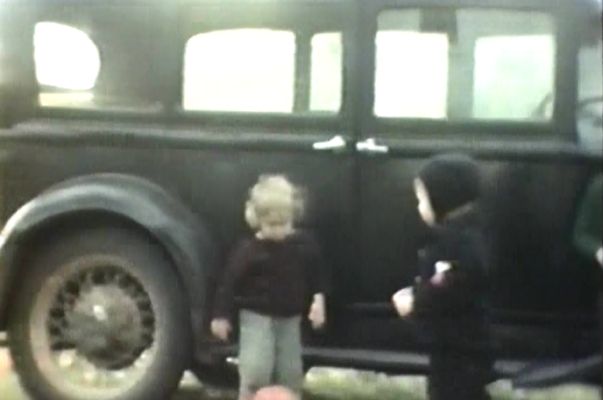
George's 1928 Franklin Airman — photo sent by his grandson Bill Lewis
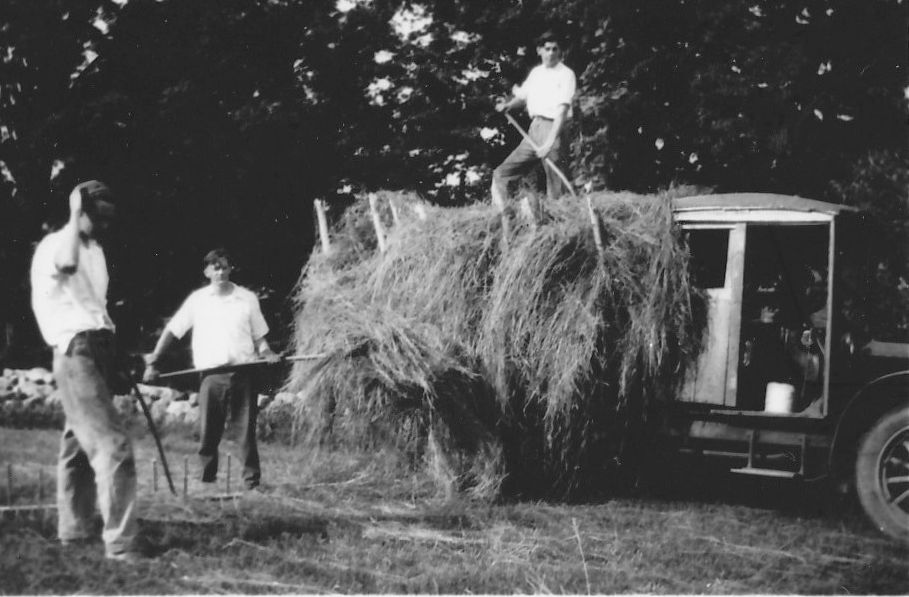
The boys haying at Lewis farm
The sons bought the house and property from their father in 1962, and George died there in 1967. The Lewis boys sold the property to Rhoda Shaw Clark, who owned land and her own home nearby on Bradford Lane. She bought 98+ acres for $20,000 but all the buildings were in terrible disrepair. Rhoda considered having the house burned down by the fire department, as it was in bad condition and she was more interested in the land. However, this would have required paying $300 for an insurance policy, which Rhoda was not inclined to do, so the house remained in place.
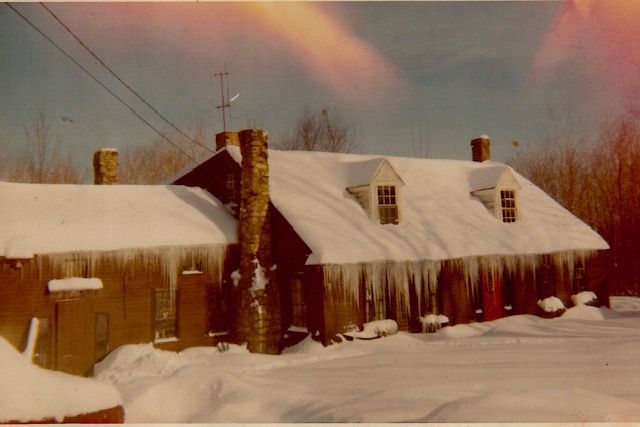
The house in 1970
In 1977 Ellen and Steve Ruggles bought the house, which still had a lot of issues. They did a lot of work in the 24 years they lived there. Ellen remembers, "We moved in right after the Blizzard of '78 with a newborn. The pipes were frozen and there was no heat or bathroom. We relied on a barrel woodstove and collected water from a stream. The house had survived a major chimney fire; the fire department had chopped a hole in the roof to save it, leaving a leak that buckled the floorboards." Ellen and Steve's daughter, Jane (Ruggles) Byam, has many fond memories of the house and still dreams about her time there as a child.
Bill and Deborah Allen acquired the house in 2001. Because Bill had years of experience in construction and Deborah was a realtor, they made a great team to handle the work. When Bill found a "river of water" going through the basement, he put in proper drainage and repointed the foundation. He replaced old beams, adding to the structural integrity, and installed another bathroom. The Allens passed the house to Todd and Laurie Mueller, who built a 3-stall barn and a riding arena. They also rebuilt and modernized the oversized garage, upgraded the electrical system, and replaced the horsehair plaster, among other improvements.
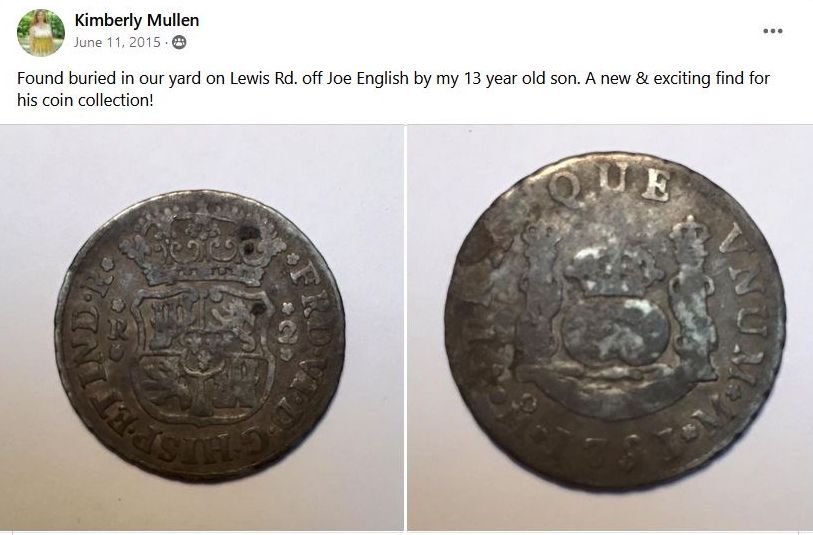
Through the cumulative work of all who have come before, the house is a lovely, modern home that still maintains the charm of wide plank floors, exposed beams, and a floor-to-ceiling stone fireplace. John and Erin Brie have lived in this special house since 2023 and are in love with its character and its story.
With appreciation to: Billy, Thomas, and Pearl Speck, Ellen Ruggles, Jane Byam, Kim Mullen, Deborah and Bill Allen, Zandy Clark, and the writings of William Lewis and Jon Lewis.
Click here to return to the main page for "Behind the Door" articles.